Indigenous Peoples and Early Encounters –
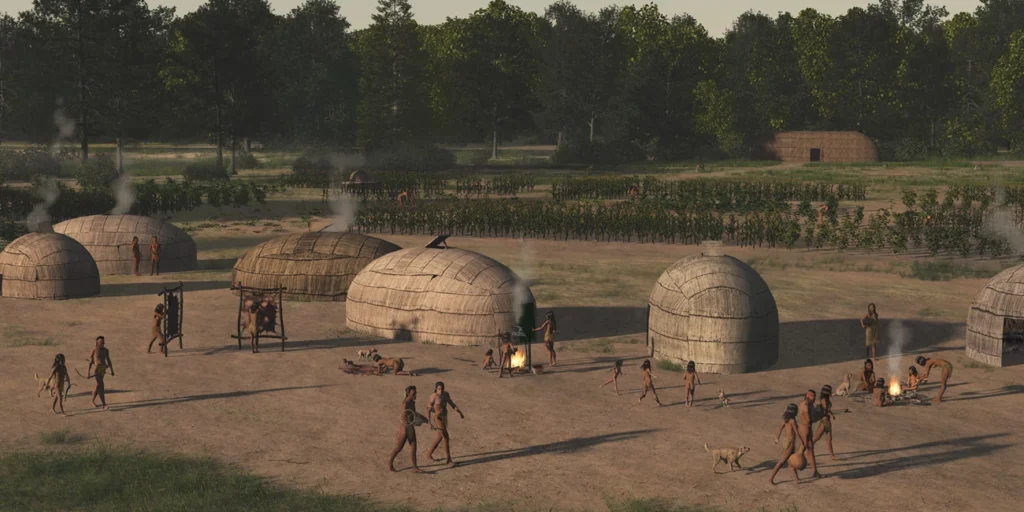
While European accounts of life in what is now known as Georgetown begin in 1608 with John Smith’s encounter with the Nacotchtank, also known as the Anacostans, archaeological evidence suggests that the area was inhabited as early as 10,000 years ago.1 About 1,000 years ago, Native tribes began to settle into villages, beginning to hunt, fish, and build permanent homes around the Chesapeake Bay.2 The confluence of the Anacostia and Potomac rivers, with the addition of nearby Rock Creek, served as a major crossroads and trading area for interior indigenous people and coastal tribes.3 The location had readily available natural resources and easy access to water for the active trading that occurred among the tribes on the Chesapeake Bay.4
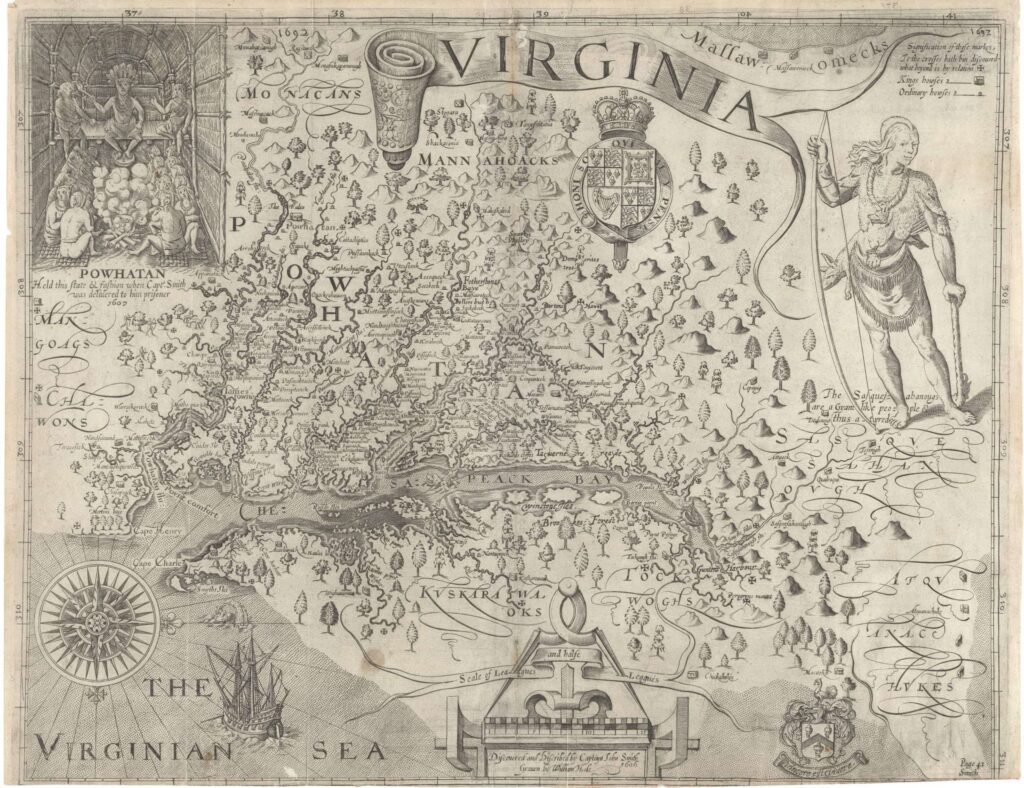
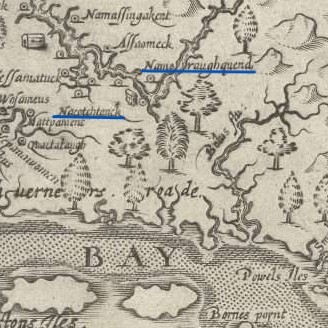
There were two main villages in the area that is now the capital: Nacotchtank on the west bank of the Anacostia River, near what is now Bolling Air Force Base and Anacostia Park today, and Nameroughquena, on the Arlington, Virginia side of the river by Theodore Roosevelt Island. A smaller trading post, Tahoga, was located on the opposite side of the Potomac, at the mouth of Rock Creek, close to Georgetown today.5
Although John Smith is credited with the first contact with native tribes in the area, the extent of his contact is unknown. Some accounts indicate that he merely sailed by the area. Following John Smith’s expedition, other Englishmen came to the New World to establish trading with the Native people. The trade between the English and the Native Americans was exploitative in nature, with the Englishmen using the trading venture to get rich from the beaver pelts Native people provided, in exchange for axes, hoes, guns, and other English-manufactured goods.6
The Nacochtank were part of the Piscataway Confederacy in the area and lived relatively peacefully with the European colonizers until 1622, when the Second Powhatan war began with the Jamestown massacre, where over 300 colonists were killed by Powhatan’s forces.
Though the massacre occurred south of the Potomac area, colonist attitudes towards Native people shifted from possible cohabitation and peaceful trading to violence.8 Since contact with the Europeans, the Nacotchtank had slowly lost numbers due to European diseases they had no defense against. With their numbers already dwindling, the Second Powhatan War, which lasted ten years, left their numbers at approximately ten percent of what they were in 1608.9
After the war, the remaining Nacotchtank people joined larger tribes in the area, being forced from their homeland due to disease, war, and colonist encroachment.
Early Colonists –
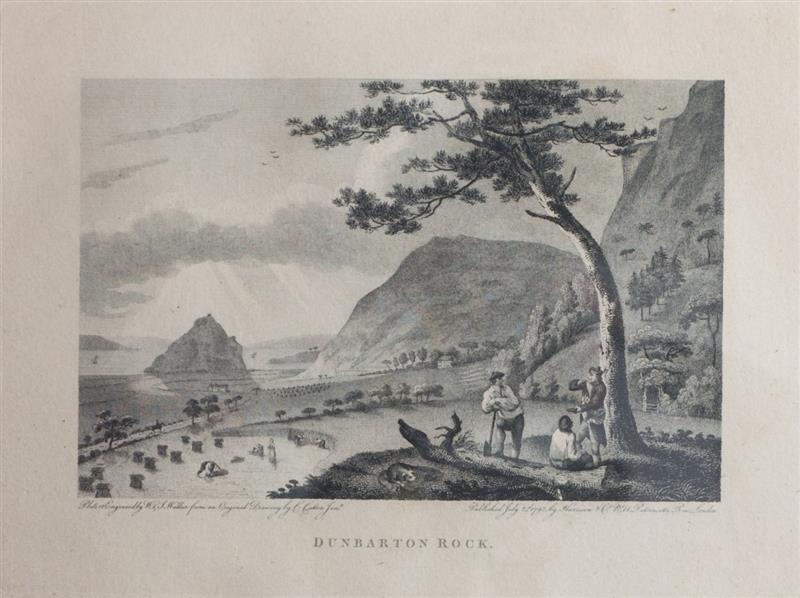
While smaller landholding was possible in the colonies, larger and more profitable tracts of land were issued by the King of England, considered the “Absolute Lord Proprietor of the Province.” As a result, ownership of profitable land in Maryland was generally restricted to those who had curried favor with the crown. One of the most famous landowners in the now-DC area was Ninian Beall, whose 795 acres spanned both sides of Rock Creek and extended down to the Potomac. The 408 acres on the west side of Rock Creek, which extended up to the hill of what is now upper Georgetown, were named “The Rock of Dumbarton” after the geological feature near Fife in Beall’s native Scotland. The 225 acres on the east side of the creek were named “Beall’s Levels.” Upon Beall’s death in 1717, at the approximate age of 90, he left the Rock of Dumbarton to his eighth child, George, in addition to “his choice of one of my feather beds, bolster and pillow and other furniture thereunto belonging.”10
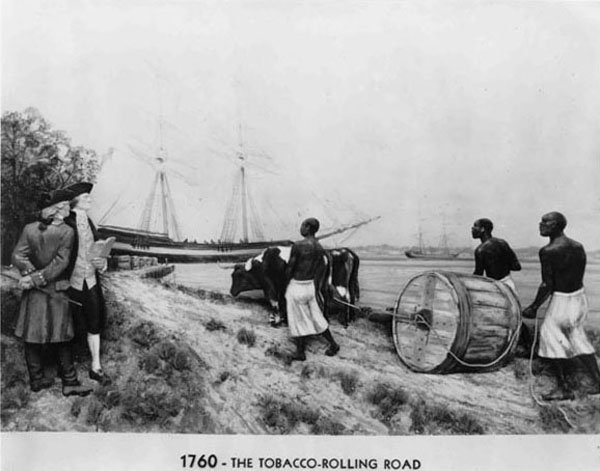
Land along the Potomac was especially well-suited for growing tobacco, which made the acreage George Beall inherited extremely profitable. Potomac tobacco was highly prized in England and fetched a higher price than tobacco grown in Virginia. George Gordon, another landowner, recognized the potential of their location for both the growth and shipping of tobacco, and established a tobacco inspection house on the river, making the first steps towards Georgetown’s future as a profitable inland port. Georgetown was at the end of a long “rolling road” that led from inland plantations to the port for sale.11 Tobacco was grown, harvested, dried, packed, and transported by enslaved labor. Cultivating and selling tobacco was a labor-intensive process, so to earn a profit, enslaved labor was required.12
The tobacco grown further inland needed to be transported to the port on the river for sale. For transport, enslaved individuals loaded the dried leaves into a large barrel, called a hogshead. A pole was put through the center of the hogshead barrel to allow it to roll. The hogshead wheel was then attached to a horse or oxen to be rolled along the road to be sold at the port. Thus came the term “rolling roads.”13
Georgetown Becomes a Town –
The port’s profitability did not go unnoticed by the Maryland legislature, which recognized the location’s utility as both a town and a trading port. In 1751, the Assembly of the Province of Maryland authorized the creation of a new municipality in Frederick County, at the confluence of the Potomac River and Rock Creek. Upon the completion of a survey in February 1752, it was determined that portions of George Gordon’s Rock Creek Plantation and George Beall’s Rock of Dumbarton were the most convenient locations to plan a new town.14
A plan for the future town was laid out, comprising eighty lots spanning sixty acres of land on the Potomac. Beall and Gordon were informed that, in exchange for their land—which would be seized by eminent domain—they would be compensated, and could each choose any two lots in the new town as their own. By all accounts, Gordon agreed to the terms and surrendered his land in exchange for lots 48 and 52.15
George Beall, less enthused at the prospect of losing his prime riverfront property, angrily opposed the proposal and was given a deadline by which to make his decision by the Maryland Assembly: “if he did not make his choice of lots within 10 days from February 28th, he could only blame himself for the consequences.”
Afte weighing his options, Beall issued his reply: “If I must part with my property by force, I had better save a little than be totally demolished. Rather than none, I accept these lots, numbers 72 and 79, said to be Mr. Henderson’s and Mr. Edmonston’s. But I do hereby protest and declare that my acceptance of the said lots, which is by force, shall not debar me from future redress from the Commissions or others, if I can have the rights of a British subject. God save the King. GEORGE BEALL. March 7, 1752.”16
Pre-Revolution Tensions –
Over the next twenty years, Georgetown developed as the major center for commerce in the Maryland Colony. As a result, leading up to 1776, the port felt the pressure and was wary of the new taxes imposed by the crown. As more Intolerable and Coercive Acts were passed, the wariness grew. A rising chorus of Georgetown businessmen began denouncing the heavy-handed regime of King George III.17
The taverns of Georgetown were a meeting place for the community and soon became a hotbed for revolutionary content in the community. Local businessmen, like George Washington, would have meetings at taverns, and most definitely spoken about the new taxes and acts enacted by Parliament.18
Georgetown itself was never specifically targeted by the English government, like Boston or Charleston, most likely due to its size. The community, in meetings at taverns, decided to lend support and solidarity to the other colonial ports that were in bitter disputes with the Crown’s Tax Authority.19
Georgetown’s history leading up to the American Revolution is sparsely documented. While recorded incidents of rebellion took place in larger metropolitan areas like Boston and Philadelphia, Georgetown’s inhabitants, who engaged in commerce with Great Britain and the rest of the world, would have been aware of and participated in colonial politics. Like other small communities, Georgetown stood with its neighbors and participated in boycotts and non-importation agreements.20
Written by Education and Programs Manager, Caroline Eisenhuth and Curator of Archives and Collections, Isabella Kiedrowski
March 2026
Notes:
- Elizabeth Rule, “Introduction: Washington DC, is Indian Land,” in Indigenous DC: Native Peoples and the Nation’s Capital (Georgetown, 2023); David Mould, and Missy Lowe, Remembering Georgetown: A History of the Lost Port City (The History Press, 2009). ↩︎
- Rule, “Introduction: Washington DC, is Indian Land,” in Indigenous DC: Native Peoples and the Nation’s Capital; Mould, and Lowe, Remembering Georgetown ↩︎
- Rule, “Introduction: Washington DC, is Indian Land,” in Indigenous DC: Native Peoples and the Nation’s Capital; “Native Peoples of Washington, DC,” National Parks Service, accessed March 2, 2026, https://www.nps.gov/articles/native-peoples-of-washington-dc.htm ↩︎
- Rule, “Introduction: Washington DC, is Indian Land,” in Indigenous DC: Native Peoples and the Nation’s Capital ; Mould, and Lowe, Remembering Georgetown ↩︎
- Rule, “Introduction: Washington DC, is Indian Land,” in Indigenous DC: Native Peoples and the Nation’s Capital; Mould, and Lowe, Remembering Georgetown; National Parks Service, “Native Peoples of Washington, DC.” ↩︎
- Rule, “Introduction: Washington DC, is Indian Land,” in Indigenous DC: Native Peoples and the Nation’s Capital; Mould, and Lowe, Remembering Georgetown; National Parks Service, “Native Peoples of Washington, DC.” ↩︎
- https://www.nps.gov/cajo/planyourvisit/werowocomoco.htm ↩︎
- Rule, “Introduction: Washington DC, is Indian Land,” in Indigenous DC: Native Peoples and the Nation’s Capital; Mould, and Lowe, Remembering Georgetown ↩︎
- Rule, “Introduction: Washington DC, is Indian Land,” in Indigenous DC: Native Peoples and the Nation’s Capital; Mould, and Lowe, Remembering Georgetown ↩︎
- Maryland State Archives, Prince George’s Co. Probate Records 1698–1770, Prince George’s Co., MD Will Book 1:92-93. ↩︎
- Kathleen Menzie Lesko, Valerie M. Dabb, and Carroll R. Gibbs, “The Early Years: 1740-1900,” In Black Georgetown Remembered: A History of Its Black Community from the Founding of the “Town of George” in 1715 to the Present Day (Georgetown, 2021) ↩︎
- Lesko, Dabb, and Gibbs, “The Early Years: 1740-1900,” In Black Georgetown Remembered. ↩︎
- Mould, and Lowe, Remembering Georgetown ↩︎
- Mould, and Lowe, Remembering Georgetown ↩︎
- Mould, and Lowe, Remembering Georgetown ↩︎
- 1752 was, incidentally, a leap year, meaning that Beall sent his decision to the Assembly with one day to spare. Mould, and Lowe, Remembering Georgetown ↩︎
- Mould, and Lowe, Remembering Georgetown ↩︎
- Mould, and Lowe, Remembering Georgetown ↩︎
- Mould, and Lowe, Remembering Georgetown ↩︎
- Mould, and Lowe, Remembering Georgetown ↩︎
Bibliography:
Hilleary, Cecily. “Native Americans Were Original Residents of Nation’s Capital.” Voice of America, January 16, 2020, https://www.voanews.com/a/usa_native-americans-were-original-residents-nations-capital/6182622.html
Lesko, Kathleen Menzie, Valerie M. Dabb, and Carroll R. Gibbs. “The Early Years: 1740-1900.” In Black Georgetown Remembered: A History of Its Black Community from the Founding of the “Town of George” in 1715 to the Present Day. 30th Anniversary Edition. Georgetown University Press, 2021.
Mould, David, and Missy Lowe. Remembering Georgetown: A History of the Lost Port City. The History Press, American Chronicles, 2009.
National Parks Service. “Native Peoples of Washington, DC.” Accessed March 2, 2026. https://www.nps.gov/articles/native-peoples-of-washington-dc.htm
Rule, Elizabeth. “Introduction: Washington DC, is Indian Land.” In Indigenous DC: Native Peoples and the Nation’s Capital. Georgetown University Press, 2023.
Maryland State Archives. Prince George’s Co. Probate Records 1698–1770, Prince George’s Co., MD, Will Book 1:92-93.